In 2009 in Kazakhstan, a group of fishermen met on a Sunday afternoon. They were on the beach of the North Aral Sea. They ate food. They did some sports. Afterwards, they told stories and sang songs about the Aral Sea and fishing. It was a good party.
The fishermen were happy because there were fish in the water. For many years, there weren’t many fish. At one time, the Aral Sea in Central Asia was the fourth largest lake in the world. It had an area of 67,300 square kilometres. Two of the biggest rivers in Central Asia, the Amu Darya and the Syr Darya, went into the Aral Sea. But the water almost disappeared.
The Aral Sea was a busy place. Almost 20 percent of the Soviet Union’s fish came from here. 40,000 people lived and worked near the lake. Then people used the water in the two rivers for agriculture, so the water didn’t arrive at the Aral Sea. Also, it didn’t rain for many years.
Then, in 2005, the Kazakh government and the World Bank built a dam. The dam separated the north and south parts of the sea. Then the north part of the Aral Sea started to fill with water again.
Philip Micklin is a scientist. He studies the Aral Sea. In 2010 he said ‘Nature can come back.’ But in 2014, he saw satellite pictures of the east part of the Aral Sea. It was completely dry.
In June 2015 a scientist from Uzbekistan, Yusup Kamalov, and a National Geographic reporter visited the Aral Sea. They found a huge desert. They stood on the sand. Once it was the edge of the water. Now the water is 80 kilometres away. They drove to the water. On the way, they passed oil and natural gas rigs. Kamalov said that every year there are more oil rigs. They arrived at the edge of the Aral Sea. The water was very salty. There were no fish. Kamalov said, ‘This is what the end of the world looks like’.
Թարգմանություն
2009թվականին, Ղազախստանում, մի խումբ ձկնորսներ հանդիպեցին կիրակի օրը՝ կեսօրին: Նրանք գտնվում էին Հյուսիսային Արալ ծովի լողափում : Նրանք հաց կերան : Նրանք մի քիչ սպորտով զբաղվեցին: Դրանից հետո նրանք պատմություններ պատմեցին և երգեր երգեցին Արալ ծովի և ձկնորսության մասին: Լավ երեկույթ էր:
Ձկնորսները ուրախ էին, քանի որ ջրի մեջ ձկներ կային: Երկար տարիներ ձկները այնքան էլ շատ չէին: Ժամանակին Կենտրոնական Ասիայի Արալ ծովը համարվում էր աշխարհում չորրորդ ամենամեծ լիճը: Այն ուներ 67,300 քառակուսի կիլոմետր տարածք: Կենտրոնական Ասիայի ամենամեծ գետերից երկուսը ՝ Ամու Դարյա և Սիրիա Դարիա, թափվում էին Արալ ծով: Բայց ջուրը գրեթե անհետացավ:
Արալ ծովը բանուկ տեղ էր: Խորհրդային Միության ձկների գրեթե 20 տոկոսը այստեղից էր գնում: 40 000 մարդ ապրում և աշխատում էր լճի մերձակայքում: Մարդիկ երկու գետերի ջրերը օգտագործում էին գյուղատնտեսության համար, ուստի ջուրը չէր հասնում Արալ ծով: Բացի այդ երկար տարիներ անձրև չէր գալիս:
Այնուհետև, 2005-ին, Ղազախստանի կառավարությունը և Համաշխարհային բանկը ամբարտակ կառուցեցին: Ամբարտակը առանձնացրեց ծովի հյուսիսային և հարավային մասերը: Այնուհետև Արալ ծովի հյուսիսային մասը նորից սկսեց ջուր լցվել:
Ֆիլիպ Միկլինը գիտնական է: Նա ուսումնասիրում է Արալ ծովը: 2010-ին նա ասաց. «Բնությունը կարող է վերադառնալ»: Բայց 2014թ-ին նա տեսավ Արալ ծովի արևելյան մասի նկարները՝ արված արբանյակներից: Այն ամբողջովին չոր էր:
2015 թվականի հունիսին Ուզբեկստանի գիտնական Յուսուպ Կամալովը և National Geographic- ի թղթակիցը այցելեցին Արալ ծով: Նրանք գտան մի հսկայական անապատ: Նրանք կանգնած էին ավազի վրա, որը մի ժամանակ ջրի եզրն էր եղել: Այժմ ջուրը 80 կմ հեռավորության վրա է գտնվում: Նրանք մեքենայով գնացին դեպի ջրի կողմը: Ճանապարհին նրանք անցան նավթային և բնական գազի սարքավորումների մոտով: Կամալովն ասաց, որ ամեն տարի ավելի շատ նավթային հորատանցքեր են ավելանում: Նրանք հասան Արալ ծովի եզրին: Ջուրը շատ աղի էր: Ձուկ չկար: Կամալովն ասաց. «Ահա այսպիսի տեսք ունի աշխարհի վերջը»:
fishermen (n) men whose job is to catch fish- ՁԿՆՈՐՍ
dam (n) a wall to stop water flowing ՊԱՏՆԵՇՙ ԱՄԲԱՐՏԱԿ
rig (n) a structure for getting oil or gas out of the ground ՍԱՐՔԱՎՈՐՈՒՄ
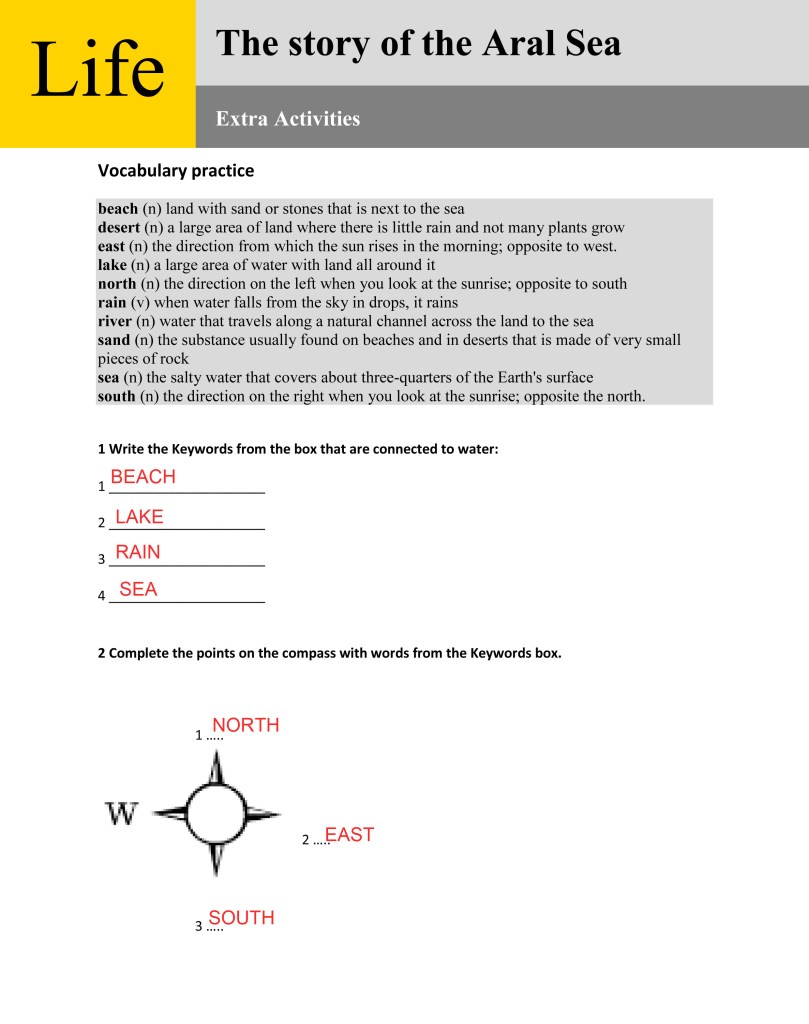
beach (n) land with sand or stones that is next to the sea- ԾՈՎԱՓ, ԱՓ
desert (n) a large area of land where there is little rain and not many plants grow ԱՆԱՊԱՏ
east (n) the direction from which the sun rises in the morning; opposite to west ԱՐևԵԼՔ
lake (n) a large area of water with land all around it ԼԻՃ
north (n) the direction on the left when you look at the sunrise; opposite to south ՀՅՈՒՍԻՍ
rain (v) when water falls from the sky in drops, it rains ԱՆՁՐև
river (n) water that travels along a natural channel across the land to the sea ԳԵՏ
sand (n) the substance usually found on beaches and in deserts that is made of very small pieces of rock ԱՎԱԶ
sea (n) the salty water that covers about three-quarters of the Earth’s surface ԾՈՎ
south (n) the direction on the right when you look at the sunrise; opposite the north ՀԱՐԱՎ
Reading comprehension:
Read the article and choose the correct option.
1. Where is the Aral Sea?
in Central Asia
in Kazakhstanin
in Uzbekistan
2. What is the problem in the Aral Sea?
It’s full of oil.
It’s getting bigger.
It’s getting smaller.
Read the article again and choose the correct option.
3. According to paragraph 1, which sentence is true?
Kazakh fishermen are good at sport.
Kazakhstan is next to the North Aral Sea.
The fishermen met every Sunday.
4. Why did the fishermen meet?
because it was Sunday
to go fishing
to have a party
5. Which word describes the fishermen in 2009?
pleased
rich
sad
6. According to paragraph 2, which sentence is true?
The Amu Darya and Syr Darya are the biggest rivers in the world.
The Aral Sea is one of the biggest lakes in the world.
The biggest lake in the world is bigger than 67,300 square kilometres.
7. According to paragraph 3, which sentence is true?
Nobody knows why the Aral Sea got smaller.
There are two reasons why the Aral Sea got smaller.
There’s one reason why the Aral Sea got smaller.
8. What happened because of the dam?
The water in the Aral Sea disappeared.
There was more water in the North Aral Sea.
There was more water in the South Aral Sea.
9. How did Yusup Kamalov and the reporter travel to the Aral Sea?
by boat
by car
on foot
10. Why were there no fish in the sea?
because of the oil rigs
because of the salt
because of the sand
Extra activities:

.

 Վովա Չոբանյանի բլոգ